Making the Most of Your DfE SEND Funding in 2026
A practical guide to specifying, funding, and building a case for sensory provision

Between recognising the need and having a functioning room, there are real questions to answer. What should the space contain, how do you justify the spend, and where does the funding come from? This guide works through all three.
Sensory rooms have moved from specialist provision to mainstream expectation in UK SEND education. Schools that have them report calmer pupils, improved engagement, and better outcomes for children with autism, ADHD, sensory processing difficulties, and complex learning needs.
This guide is for schools at any stage of that journey. Whether you are building a case for governors, working out what the room should contain, or trying to make sense of the funding landscape.
The case for sensory provision has never been stronger or better funded
Why Sensory Rooms Belong in Schools
The SEND Code of Practice places a clear duty on schools to make reasonable adjustments and use their best endeavours to meet pupils' needs. For a significant number of pupils with EHCPs (Education, Health and Care Plans), sensory regulation is not a peripheral concern, it is a daily one.
When a child with autism becomes dysregulated, learning stops. For pupils with sensory processing difficulties, a busy classroom can be actively distressing. A well-designed sensory room gives those pupils a reliable route back to a regulated, ready-to-learn state. It also gives staff a structured intervention, rather than improvised de-escalation in a corridor.
The attainment argument follows naturally. Pupils who spend less of their school day in crisis spend more of it learning. The Department for Education's own SEND review has placed growing emphasis on early, preventative support, and sensory provision sits squarely within that framework.
One size does not fit all: finding the right room for your pupils
What Type of Sensory Room Does Your School Need?
Not all sensory rooms serve the same purpose. Getting the specification right matters both for pupil outcomes and for building a case that funders and governors will support. There are three broad approaches and many schools benefit from elements of more than one.
Calming and Regulatory Rooms
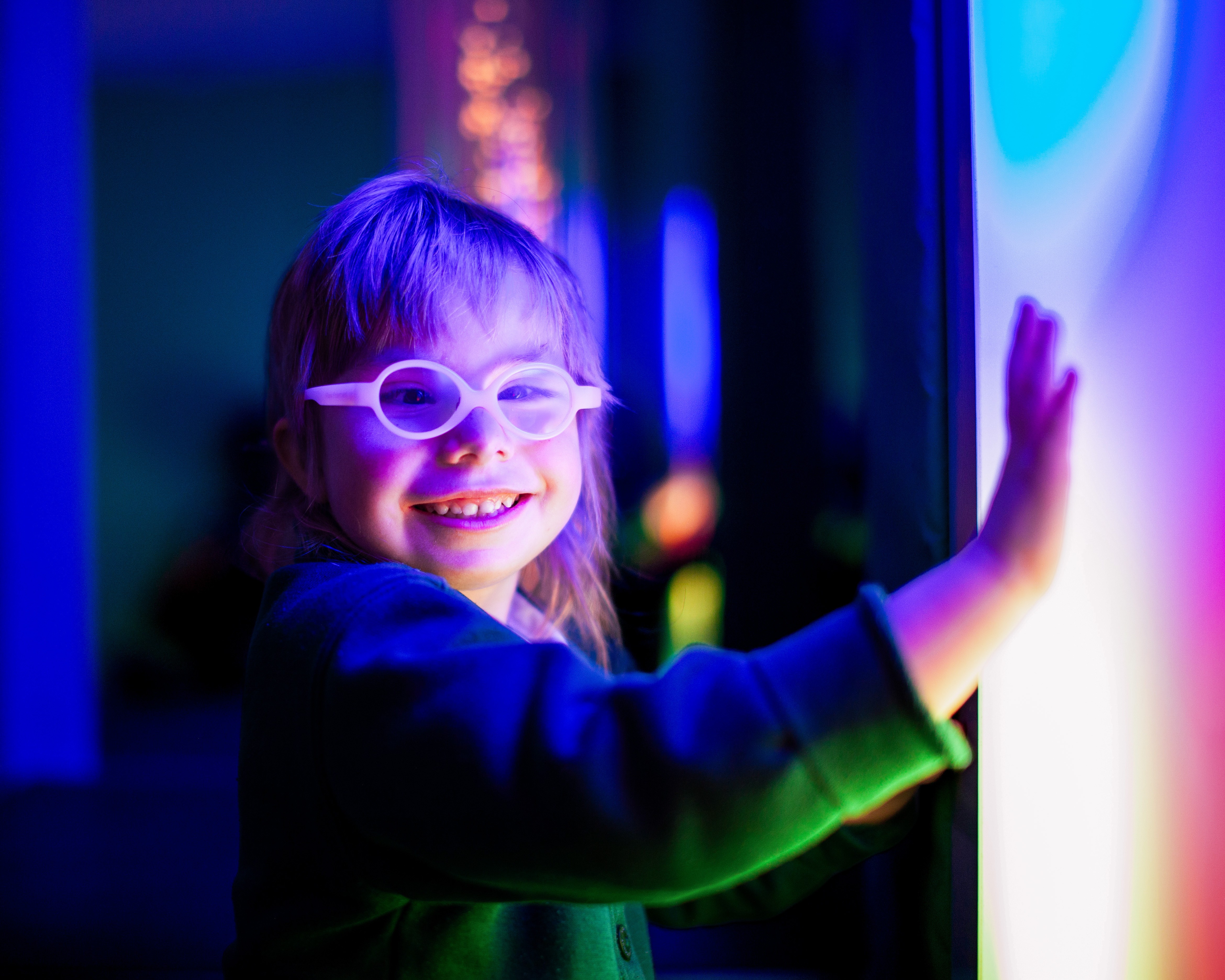
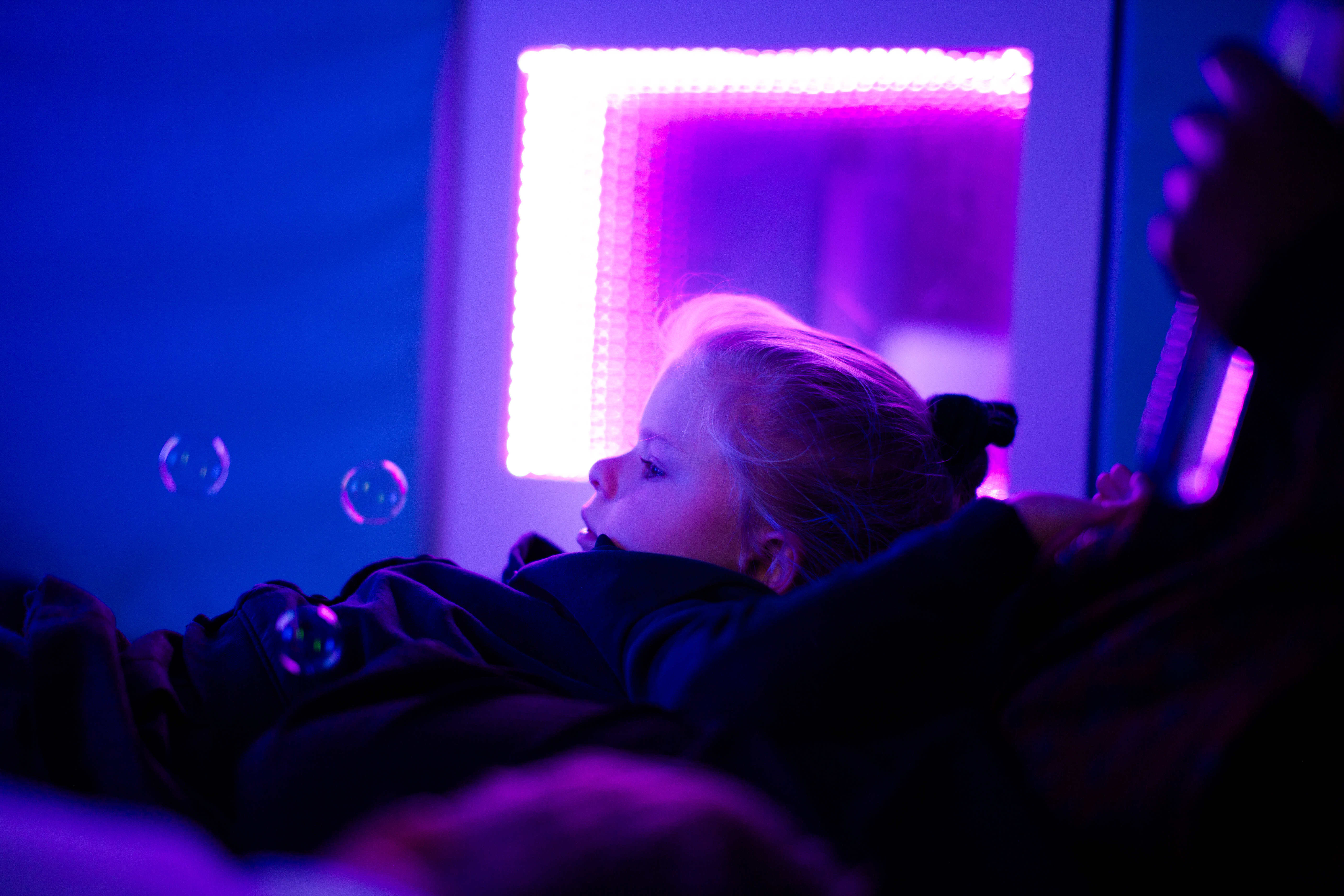
The primary function here is de-escalation and self-regulation. These rooms typically feature lower light levels, soft textures, gentle soundscapes, and minimal visual clutter. Fibre optic lighting, bubble tubes, and tactile wall panels are common. The aim is to reduce sensory load and offer pupils a calm, predictable environment in which to settle.
These rooms suit schools with higher numbers of pupils with autism, anxiety, or significant sensory sensitivities. They are also the most straightforward to justify to governors. The link between a calm space and improved behaviour and attendance is intuitive and well-evidenced.
Active and Stimulating Rooms
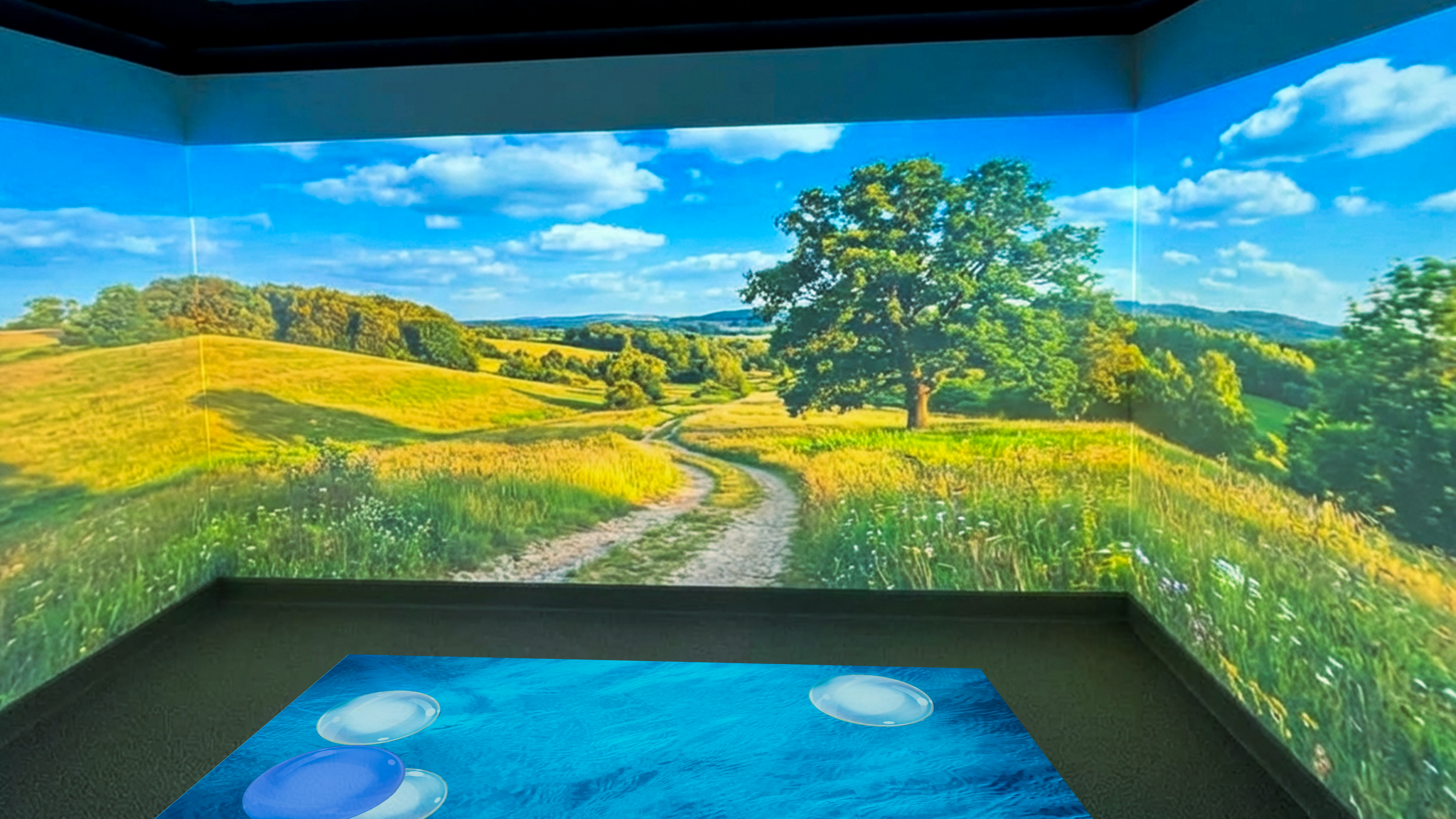
Some pupils, particularly those who are sensory-seeking rather than sensory-avoidant, benefit from the opposite: structured, enriching stimulation. Rooms designed for this purpose might include interactive floor projection, light and sound response systems, and physical play elements. The goal is to provide appropriate sensory input in a way that satisfies seeking behaviours, reducing the likelihood of pupils seeking stimulation in disruptive ways.
Immersive Multi-Sensory Environments
A fully immersive sensory room brings projection, sound, interactive technology, tactile elements, and lighting together into a single, controllable environment. Rooms like this can be programmed for different modes, shifting from calming to stimulating to focused, making them genuinely usable across a wider range of pupils, needs, and therapeutic contexts.
Immersive environments typically require more investment. But they also offer the strongest case for shared use across different pupil groups, year groups, and therapy timetables, which strengthens the cost-per-pupil argument significantly when presenting to governors or funders.

Specifying the Right Room: Questions Worth Asking First
Before approaching any supplier or writing a funding bid, it is worth working through a clear specification. The following questions shape both what you buy and what you write in your business case.
A room serving six pupils with complex needs in one-to-one sessions is specified very differently from one used by thirty pupils per week across a broad range of needs. The volume and profile of use drives decisions about durability, flexibility, and technology.
Sensory rooms are most fundable and effective when tied to specific, measurable outcomes. 'Reducing the number of managed moves per term for pupils with ASD' is a stronger case than 'providing a calming space.' Tie your specification to your SEND strategy and, where possible, to individual EHCPs.
Complex technology only delivers value if the people using it feel confident. Any reputable supplier should include staff training as standard. Consider also how sessions will be timetabled, recorded, and evaluated. All of which matter to Ofsted as much as to funders.
Sensory rooms have been installed in spaces as modest as a storage room and as significant as a dedicated classroom. A supplier worth working with will survey your space and design around it. Consider your electrical supply, ventilation, flooring, and whether the room may need to serve another purpose outside its primary use.
Technology needs ongoing support. Before signing any contract, establish clearly what is covered, for how long, and at what cost if something fails. Ask for references from schools the supplier has worked with, not just at installation, but twelve to eighteen months later.
More funding routes exist than most schools realise
How to Fund a Sensory Room: UK Options for Schools
Funding is consistently cited as the main barrier. In practice, there are more routes available than most school business managers realise and a well-constructed case can draw on several of them at once.
Pupil Premium
Schools receive Pupil Premium funding for qualifying pupils, and there is no prescribed list of what it can be spent on. It must simply be spent on provision that the school can demonstrate improved outcomes for eligible pupils. A sensory room is a legitimate use where you can show a clear link to improved attendance, behaviour, or attainment. The key is documentation: the room should appear in your Pupil Premium strategy with stated expected impact and a plan for measuring it. Many schools use Pupil Premium to fund a portion of the cost alongside other sources.
SEND Notional Budget
Every maintained school receives a SEND notional budget as part of its overall allocation, intended to fund the first £6,000 of support for any pupil with SEND before the local authority contributes top-up funding. Schools have discretion in how this budget is used to build SEND capacity and that includes capital items such as sensory room equipment.
High Needs Funding and Local Authority Capital Grants
Where a sensory room can be evidenced as necessary to meet the needs of pupils with EHCPs, schools can make a case to their local authority for contribution from the high needs budget. This works best where there is a cluster of pupils whose plans reference sensory provision, and where the school can demonstrate that the alternative — specialist placement, for example — would be more costly. Some local authorities also maintain small capital grants for SEND infrastructure improvements. A direct conversation with your SEND lead at the LA, particularly in the context of the local SEND Improvement Plan, is worth pursuing.
For academies and free schools, the Condition Improvement Fund, administered by the ESFA, offers capital grants for building works. A permanent sensory room installation may qualify. Applications are competitive but successful bids have funded sensory provision. Larger multi-academy trusts receive a School Condition Allowance directly and have more flexibility to allocate it across their estate.
National Lottery Community Fund
Awards for All grants of up to £10,000 are accessible for schools working with children and young people facing disadvantage. The application process is relatively straightforward, and sensory room projects that benefit children with SEND, particularly in areas of high deprivation, are a strong fit. Reaching Communities grants are available for larger or more complex projects.
Charitable Grant Sources
The following funders have supported sensory room projects in UK schools. Availability and priorities change, so always check current criteria before applying:
- Henry Smith Charity — grants for projects supporting disabled children and young people
- BBC Children in Need — projects supporting children under 18 facing disadvantage or disability
- Garfield Weston Foundation — education and community projects
- Esmée Fairbairn Foundation — larger grants for projects with clear social benefit
- Local community foundations — most regions have a community foundation distributing local charitable funds; sensory provision for SEND pupils is typically well-aligned with their priorities
Fundraising and Sponsorship
PTAs, local businesses, and community fundraising have contributed meaningfully to sensory room projects in many schools — particularly where the school has communicated the need clearly to its community. Local employers with CSR commitments around disability and inclusion can be receptive to sponsoring a specific element of a room.

Getting governors on board: how to make the numbers make sense
Writing a Business Case for Governors
A sensory room business case for a school governing body should address four things clearly: need, evidence, cost, and return.
Need — What is the current situation, and why is it inadequate? Use your own data: the number of pupils with relevant needs, the frequency of dysregulation incidents, the time lost to managed moves or exclusions, the staff time spent on de-escalation.
Evidence — What does the research say, and what have comparable schools found? There is a solid evidence base linking sensory regulation environments to improved outcomes for pupils with ASD and sensory processing difficulties. Peer examples from schools in similar contexts carry particular weight.
Cost — Present the full cost including installation, staff training, and any ongoing maintenance. Break it down by funding source so governors can see that the net cost to the general budget is manageable.
Return — Frame this in terms governors care about: pupil outcomes and Ofsted readiness. Inclusive provision runs clearly through the inspection framework and the cost of not acting. Specialist placement costs, exclusion risks, and staff time are all part of that calculation.
Seen in schools: what sensory provision looks like when it works
What Good Looks Like: Aurora in Practice
Teddington School worked with Aurora to create a multi-sensory immersive environment that flexes between calming and stimulating scenes, meeting the needs of a diverse range of pupils across the school's SEND register. The installation was designed around the school's existing space and integrated with their timetable from the outset.
Castle Tower School, a specialist setting in Derry, used a sensory room to extend the range of therapeutic and educational sessions available to pupils with complex needs. The room supports one-to-one sensory integration work, group calming sessions, and curriculum delivery adapted for pupils with significant sensory processing difficulties.
Talk to Aurora About Your Project
We work with schools across the UK to design, install, and support sensory and immersive environments. Our consultation is non obligatory and free. We will review your space, talk through your pupils' needs, and help you shape a fundable case.
Have a project in mind?